

Who Pays for Rental Breakage and Damage, Landlord or Renter?
Understanding Damage, Wear and Tear, and Fair Repair Responsibility
MyEstateManager Team · 10 min read · 54 views · 1 comments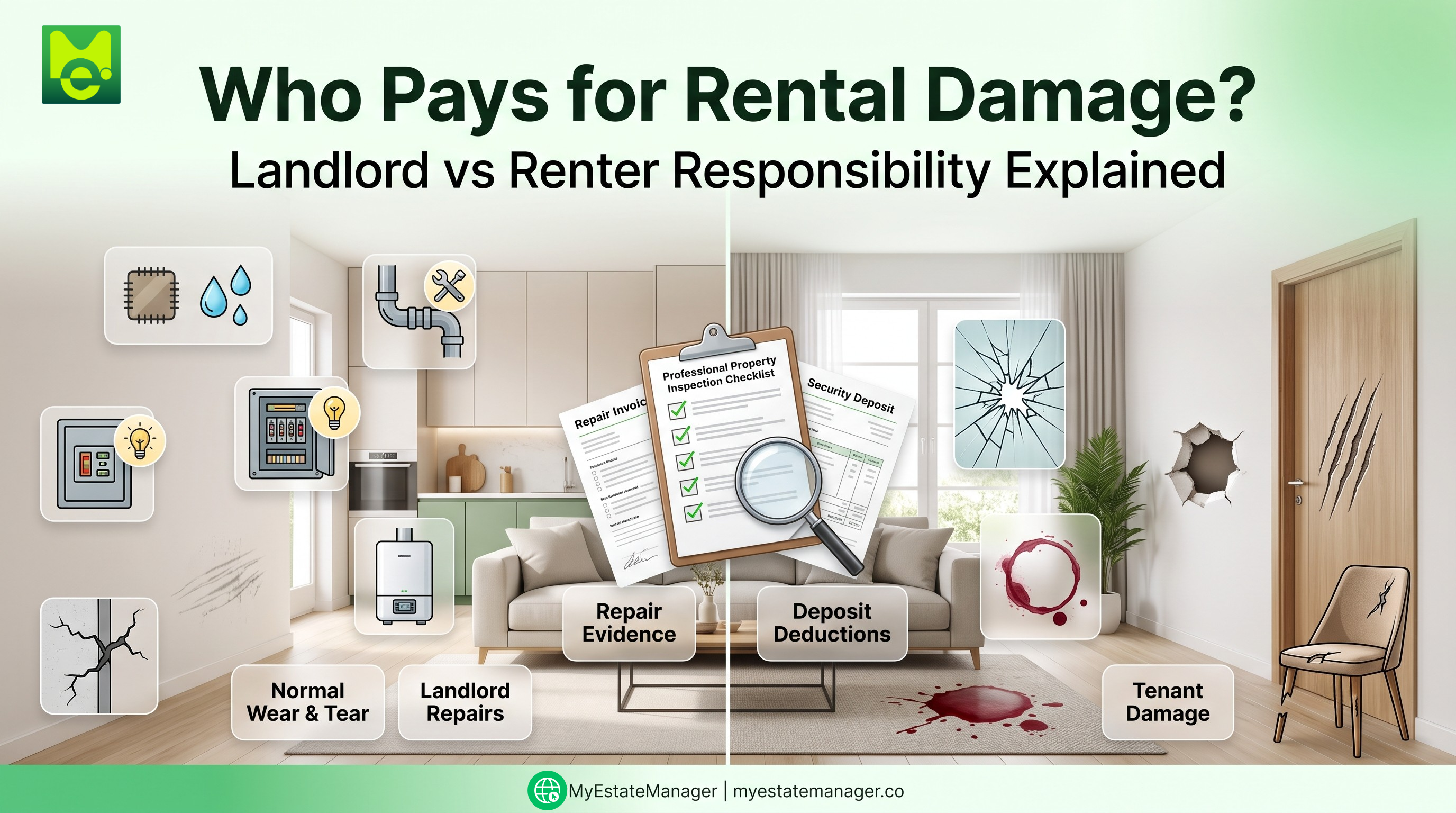
Breakage and damage disputes can quickly create confusion between landlords and renters This MyEstateManager guide explains who usually pays for rental damage, how normal wear and tear works, what evidence matters, and how both sides can avoid unfair deposit deductions
Overview
Who Pays for Rental Breakage and Damage, Landlord or Renter?
Breakage and damage disputes can quickly turn a normal rental relationship into a stressful disagreement This guide explains when landlords usually pay, when renters usually pay, how normal wear and tear works, what evidence matters, and how both sides can avoid unfair deposit deductions
🏡 What It Means
In rental housing, breakage and damage refers to harm caused to the property, fixtures, fittings, appliances, furniture, floors, walls, doors, windows, gardens, or shared spaces The important question is not only what broke, but why it broke
Landlords usually pay for repairs caused by age, normal use, structure, safety requirements, building systems, and maintenance issues Renters usually pay for damage caused by themselves, their guests, pets, children, or household members when the damage goes beyond normal wear and tear
Faded paint after years of normal living is usually wear and tear A large hole in the wall caused while moving furniture carelessly is usually tenant-caused damage
💡 Why It Matters
This issue matters because repair responsibility directly affects money, deposits, move-out costs, trust, and legal risk A landlord may believe a deduction is fair while the renter may believe they are being charged for normal aging Without clear evidence, even a small repair can become a long dispute
Many deposit disagreements are not really about the repair itself They are about proof Was the damage already there Was the item old Did the renter report the issue Did the landlord respond on time Were move-in photos taken Was there a signed inventory
📊 Why evidence matters in damage disputes
Editorial visualization based on common evidence standards used in deposit and rental damage disputes
For landlords, understanding damage responsibility helps prevent weak deductions and avoid unnecessary conflict For renters, it helps protect the deposit and prevents them from paying for repairs that belong to the property owner
⚙️ How It Works
Rental damage responsibility usually works through four layers The tenancy agreement, local law, property condition evidence, and the cause of the problem
1️⃣ The tenancy agreement sets expectations
The lease may explain cleaning duties, garden care, pet rules, appliance responsibility, inspection rights, and deposit deductions However, a lease usually cannot remove legal repair duties that belong to the landlord
2️⃣ Local law controls the final answer
Rental law varies by country, state, and region Deposit timelines, repair obligations, notice rules, and deduction limits can differ widely This is why landlords and renters should always check the law where the property is located
3️⃣ Evidence decides the dispute
A landlord may say the renter broke a blind, but without check-in photos and inventory notes, the claim may be weak A renter may say the damage was already there, but without proof, that defense may also be weak
4️⃣ Cause decides who pays
A leaking roof is usually a landlord issue A pet stain on the carpet is usually a renter issue A storm-damaged window may involve the landlord or insurance A window broken by a guest may become the renter’s responsibility
Ownership does not mean the landlord pays for everything Occupancy does not mean the renter pays for everything The cause of the damage matters most
🛠️ Step-by-Step Framework
Step 1: Identify the damaged item
Start by identifying what is damaged Is it structural, such as a roof, wall, pipe, wiring, boiler, or window frame Is it a fixture, such as a sink, toilet, cupboard, appliance, carpet, blind, or light fitting Structural and safety-related items usually fall more clearly under landlord responsibility
Step 2: Check the move-in condition
Compare the current condition with move-in photos, videos, signed inventory, inspection notes, and communication history If the damage already existed, the renter should not normally pay for it
Step 3: Decide whether it is wear and tear or damage
Fair wear and tear means ordinary deterioration from normal living This may include faded paint, minor scuffs, worn handles, traffic marks on carpet, or aging fixtures Damage is harm beyond normal use, such as burns, stains, broken glass, missing fixtures, or holes in walls
Step 4: Identify who caused it
If the renter, guest, pet, or household member caused the issue through misuse, carelessness, or intentional action, the renter may be responsible If the issue happened because of age, structure, weather, hidden defects, or delayed maintenance, the landlord usually carries responsibility
Step 5: Check whether the problem was reported
Tenants should report leaks, damp, faulty locks, broken appliances, plumbing problems, and safety issues quickly If a renter delays reporting and the damage becomes worse, responsibility may become more complicated
Step 6: Estimate the cost fairly
Landlords should use realistic repair costs, invoices, receipts, or professional quotes The deduction should reflect actual loss, not an upgrade A renter should not usually be charged the full price of a brand-new premium item when the damaged item was already old and partly worn
Step 7: Communicate before deducting
Before making a final deposit deduction, landlords should provide an itemized breakdown with evidence Renters should respond with photos, messages, reports, and any proof showing why the deduction is unfair or excessive
Step 8: Use formal dispute channels if needed
If both sides cannot agree, use the official deposit scheme, bond authority, tenancy tribunal, mediation process, or small claims process available in the local area
📋 Comparison Checklist
| Situation | Usually Landlord Pays | Usually Renter Pays | Useful Evidence |
|---|---|---|---|
| Faded paint after years of normal use | Yes | No, unless caused by misuse | Move-in photos and tenancy length |
| Large hole in wall | No, unless pre-existing | Yes, if caused by renter or guest | Photos, inspection report, repair quote |
| Broken boiler from age | Yes | No, unless misuse caused failure | Service record and engineer report |
| Carpet traffic marks | Yes, usually wear and tear | No | Carpet age and move-in condition |
| Carpet burn or pet stain | No | Yes, usually tenant damage | Photos and cleaning invoice |
| Broken window from storm | Usually yes or insurance | No, unless tenant negligence contributed | Weather report and repair report |
| Broken window from guest | May repair first | Usually yes | Incident details and photos |
| Mould from structural damp | Usually yes | No, if caused by property defect | Damp report and repair history |
📊 Common dispute areas in rental damage cases
Source note: Based on tenancy deposit dispute reporting where cleaning, damage, and redecoration commonly appear as leading dispute categories
🚫 Common Mistakes
1️⃣ Treating every defect as tenant damage
Landlords sometimes treat all move-out defects as renter damage This can create unfair deductions because faded paint, worn carpets, aging fixtures, and minor scuffs may be normal wear and tear
2️⃣ Assuming the landlord pays for everything
Renters sometimes assume the landlord must pay simply because the landlord owns the property If the renter or their guest caused the damage, the renter may still be responsible
3️⃣ Having no move-in inventory
A weak inventory creates weak claims A good inventory should include room photos, close-ups of defects, appliance condition, cleanliness level, garden condition, furniture condition, and signed confirmation
4️⃣ Charging for upgrades instead of actual loss
Landlords should not use damage deductions as a renovation opportunity A fair deduction should reflect the actual loss, the age of the item, its previous condition, and reasonable repair cost
5️⃣ Missing legal deadlines
Many regions have strict deposit protection and return deadlines Missing deadlines can create legal risk for landlords and confusion for renters
6️⃣ Not reporting small issues early
A small leak can become a major repair if ignored Tenants should report maintenance issues quickly and keep written proof of the report
⚠️ Risks and Limitations
Rental law is local A rule that applies in England may not apply in Scotland A California deposit rule may not apply in Texas A rental rule in Australia may not match a rule in Canada Always check the law where the property is located
Subjective judgment
Fair wear and tear is not always exact The age of the item, quality at the start of tenancy, number of occupants, length of tenancy, pets, and normal expected use can all affect the answer
Insurance may not cover everything
Landlord insurance and renter insurance may help in some cases, but coverage depends on the policy Some policies may exclude tenant-caused damage unless extra cover is included
Deposit may not cover full loss
Serious damage may cost more than the deposit In that case, the landlord may need to pursue the remaining amount through legal channels
This article is educational content, not legal advice For active disputes, contact a local housing authority, tenancy adviser, lawyer, tribunal, or official deposit protection body
✅ Best Next Step
The best next step is to create a clear property condition system before there is a dispute This protects both landlords and renters
🌿 Manage rental records with more confidence
MyEstateManager helps landlords, property managers, and renters think more clearly about property condition, repairs, documentation, and rental responsibilities
Explore MyEstateManager❓ FAQs
Who pays if something breaks in a rental property?
It depends on the cause If the breakage is due to age, normal use, structure, or landlord maintenance, the landlord usually pays If the renter, guest, pet, or household member caused it, the renter usually pays
What is normal wear and tear?
Normal wear and tear is ordinary deterioration from everyday living, such as faded paint, minor scuffs, worn handles, or carpet traffic marks
Can a landlord deduct for normal wear and tear?
Generally, no Deposit deductions should normally relate to unpaid rent, cleaning beyond the required standard, or damage beyond normal wear
Can a renter be charged for full replacement?
Sometimes, but the charge should be fair The age, condition, and expected lifespan of the item should be considered before charging for full replacement
Who pays for accidental damage?
If the tenant caused the accidental damage, the tenant may still be responsible Insurance may help depending on the policy
What evidence should both sides keep?
Move-in photos, signed inventories, videos, repair requests, emails, inspection reports, invoices, receipts, and checkout photos are useful
📚 Sources and Methodology
This guide was prepared using official housing guidance, government tenancy pages, court resources, landlord-tenant repair guidance, and rental deposit dispute principles Because tenancy law varies by location, this article explains general responsibility patterns rather than one universal legal rule
Leave a Comment
Your email will be verified but will never be displayed publicly.
Join the Conversation
0 approved comments. Share a useful perspective after email verification.
No comments yet. Be the first to add a helpful perspective.