

𝐍𝐞𝐰 𝐂𝐨𝐧𝐬𝐭𝐫𝐮𝐜𝐭𝐢𝐨𝐧 𝐯𝐬 𝐄𝐱𝐢𝐬𝐭𝐢𝐧𝐠 𝐇𝐨𝐦𝐞𝐬: 𝐓𝐡𝐞 𝐏𝐫𝐨𝐬 𝐚𝐧𝐝 𝐂𝐨𝐧𝐬 𝐨𝐟 𝐁𝐨𝐭𝐡
A practical buyer’s guide to comparing modern new builds and established homes before making the right property decision.
MyEstateManager Team · 15 min read · 45 views · 0 comments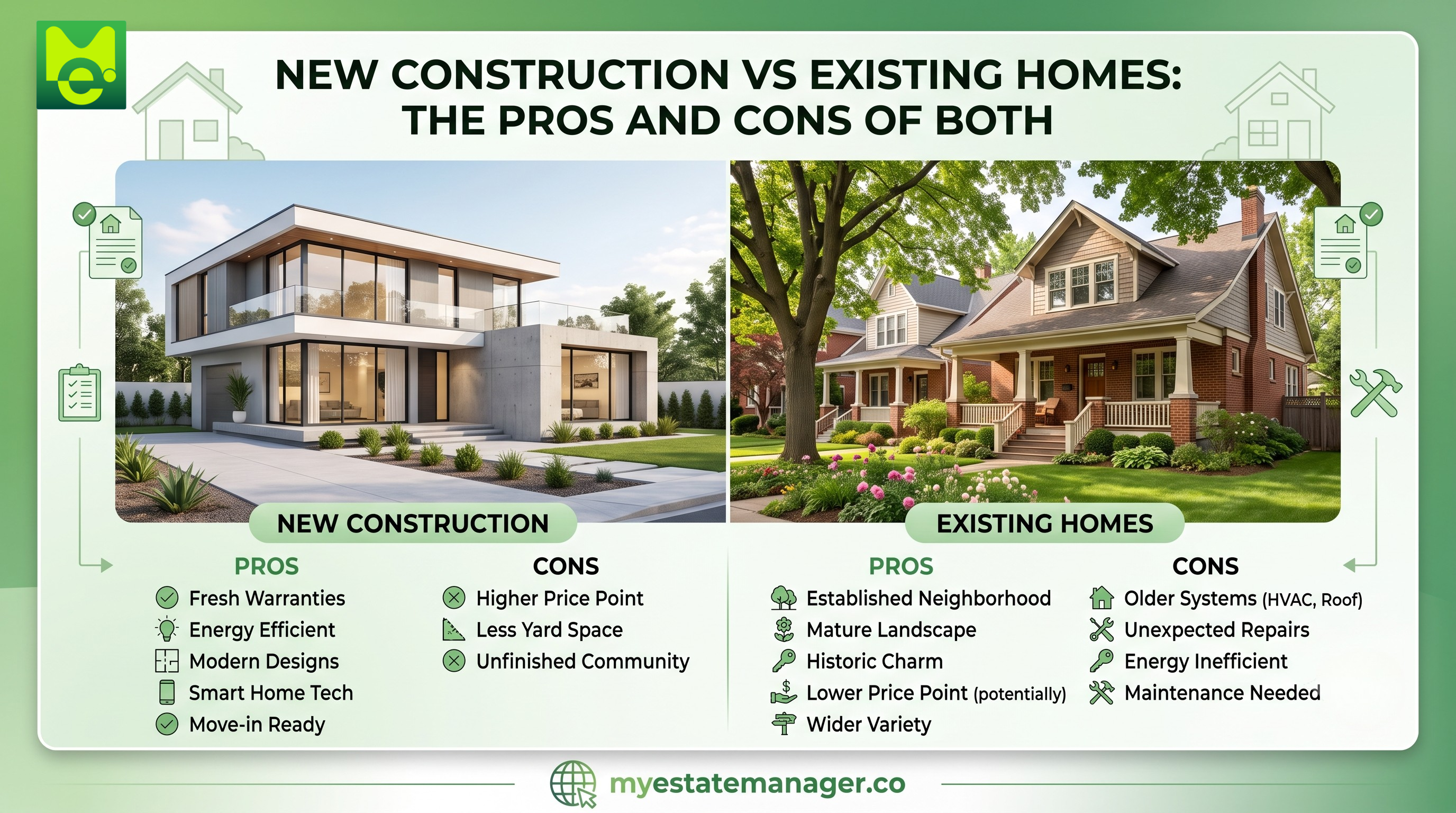
Compare new construction and existing homes to understand the pros, cons, costs, timelines, repair needs, and lifestyle factors before making the right property decision.
New Section
New Construction vs Existing Homes: The Pros and Cons of Both
Choosing between a newly built home and an existing property is one of the biggest decisions home buyers face. Both options can be smart, but the right choice depends on your budget, timeline, lifestyle, location, and long-term goals.
Introduction
Buying a home is not only a financial decision. It is also a lifestyle decision, a family decision, and often an emotional decision. One of the first questions many buyers face is whether they should buy a new construction home or an existing home. At first, the answer may seem simple. A new home sounds modern, clean, and worry-free, while an existing home may feel more established, affordable, and easier to move into.
However, the real comparison is much deeper than that. New construction homes and existing homes both come with clear advantages and possible drawbacks. A newly built property may offer modern design, energy efficiency, updated materials, and customization options. But it may also involve higher prices, construction delays, developing neighborhoods, and extra finishing costs. On the other hand, an existing home may offer a mature location, established surroundings, larger lot sizes, and immediate availability. But it may also require repairs, renovations, maintenance, and upgrades.
The best home is not always the newest one. It is also not always the older one with character. The best home is the one that fits your needs, supports your financial comfort, and gives you confidence after the purchase. That is why buyers should understand the pros and cons of both options before making a final decision.
What Is a New Construction Home?
A new construction home is a property that has recently been built or is still under construction. It may be part of a housing society, residential community, apartment project, or private development. In some cases, buyers purchase the property before construction is complete. In other cases, they buy a finished home that has never been lived in.
New construction homes often attract buyers who want a clean start. Everything feels fresh. The layout is usually modern. The electrical, plumbing, flooring, windows, kitchen, bathrooms, and structure are newly installed. Many buyers also like the idea of choosing finishes, colors, fixtures, tiles, cabinets, or other design elements if the builder allows customization.
These homes are especially appealing to buyers who want less immediate repair work and prefer a modern lifestyle. Open floor plans, smart storage, energy-saving features, updated kitchens, better ventilation, and contemporary architecture are common reasons people choose new construction.
New construction can include
- Brand-new houses in residential communities
- Newly built apartments or flats
- Custom homes built on private land
- Builder-developed villas or townhouses
- Under-construction properties booked before completion
What Is an Existing Home?
An existing home is a property that has already been built and previously owned or occupied. It may be a few years old or several decades old. Existing homes are available in established neighborhoods, developed communities, city centers, suburbs, and older residential areas.
Buyers often choose existing homes because they can physically inspect the property, understand the neighborhood, and move in faster. The surrounding area is usually already developed. Roads, schools, shops, parks, transport routes, utilities, and community life may already be in place.
Existing homes may also offer more character. Some have mature gardens, larger rooms, stronger construction styles, traditional layouts, or unique architectural details that are not always found in newer developments. However, they can also come with hidden issues if the property has not been maintained properly.
Existing homes can include
- Previously owned houses
- Older apartments or flats
- Renovated properties
- Homes in established communities
- Properties available for immediate possession
Pros of Buying a New Construction Home ✅
1. Modern Design and Better Layouts
One of the biggest advantages of new construction is modern design. Builders usually create layouts based on current buyer preferences. This may include open living areas, attached bathrooms, better kitchen placement, improved storage, larger windows, dedicated laundry areas, parking space, and cleaner interior flow.
Modern buyers often want homes that support today’s lifestyle. Families may need flexible rooms for work, study, guests, or entertainment. Newer homes are often designed with these needs in mind, making daily life more convenient.
2. Lower Immediate Maintenance
Since everything is new, buyers usually face fewer repairs in the beginning. The roof, plumbing, wiring, flooring, doors, windows, and fixtures are recently installed. This can reduce the stress of unexpected maintenance during the first few years.
A new home does not guarantee zero problems, but it usually reduces the risk of major repair costs right after purchase. This is helpful for buyers who want a smoother move-in experience.
3. Energy Efficiency
New homes are often built with better materials, improved insulation, energy-saving windows, modern electrical systems, and more efficient appliances. These features can help reduce utility bills and improve comfort.
Energy efficiency is becoming more important for buyers because monthly living costs matter. A home that uses less electricity, water, heating, or cooling can provide long-term savings.
4. Customization Options
Some builders allow buyers to choose finishes before construction is complete. This can include paint colors, tiles, cabinets, countertops, lighting fixtures, flooring, and bathroom fittings. Customization helps buyers feel more connected to the property before moving in.
Even small choices can make a home feel personal. Instead of spending money on renovations after purchase, buyers can select certain features during the building process.
5. Builder Warranty and New Materials
Many new construction homes come with warranties on certain structural elements, fixtures, or systems. This can give buyers additional peace of mind. If something goes wrong within the warranty period, the builder may be responsible for fixing it depending on the agreement.
Buyers should always read warranty terms carefully. Not every issue is covered, and coverage periods may vary. Still, having some protection can be a major advantage compared to buying an older home with no warranty.
Cons of Buying a New Construction Home ⚠️
1. Higher Purchase Price
New construction homes often cost more than similar existing homes. Buyers are paying for new materials, modern features, builder margins, development costs, and sometimes the appeal of being the first owner.
The base price may also not include everything buyers expect. Upgraded flooring, premium fixtures, better cabinets, landscaping, boundary walls, appliances, or parking improvements may cost extra.
2. Construction Delays
If the home is still being built, delays are possible. Weather, labor shortages, material delays, approval issues, supply problems, or builder management can affect completion timelines.
Delays can create financial pressure if the buyer is renting, selling another property, or planning a move around a fixed date. This is why buyers should avoid relying only on verbal promises and should review the construction timeline carefully.
3. Developing Neighborhoods
Many new construction homes are located in growing communities. This can be good for future value, but it may also mean the area is not fully developed yet. Roads, parks, shops, schools, public transport, and community facilities may still be under progress.
Buyers should ask whether they are comfortable living in an area that may take time to mature. Construction noise, dust, limited services, and ongoing development can affect daily comfort.
4. Smaller Lots or Limited Outdoor Space
In many modern developments, builders try to maximize land usage. This can result in smaller plots, compact yards, limited garden space, or houses built closer together.
Buyers who want large outdoor areas, privacy, mature trees, or wider streets may find some new developments less appealing.
5. Quality Depends on the Builder
New does not always mean better. Construction quality depends heavily on the builder’s reputation, materials, supervision, and standards. A poorly built new home can create problems even within the first year.
Buyers should research the builder, visit previous projects, review customer feedback, inspect materials, and if possible, hire an independent inspector before finalizing the purchase.
Pros of Buying an Existing Home ✅
1. Established Location
One of the strongest advantages of existing homes is location. Many are found in neighborhoods where life is already active. Roads are built, schools are nearby, shops are open, transport routes are known, and the community is already formed.
A developed location can save time and reduce uncertainty. Buyers can see exactly what they are getting instead of waiting for future promises.
2. Faster Move-In Timeline
Existing homes are often ready for possession. Once the legal process, payment, and documentation are complete, the buyer can usually move in quickly.
This is helpful for families who need immediate housing, people relocating for work, or buyers who do not want to wait for construction completion.
3. More Room for Negotiation
With existing homes, there may be more flexibility in price negotiation. The seller may be motivated due to relocation, financial needs, property upgrade plans, or market conditions.
Buyers can also negotiate based on inspection results, repair needs, market comparisons, and property condition. This can create opportunities for better deals.
4. Mature Neighborhood Character
Existing homes often come with mature surroundings. Trees, gardens, parks, local shops, neighbors, and community routines are already visible. Buyers can visit the area at different times of the day and understand the real living environment.
This is important because a home is not only the building. The neighborhood affects comfort, security, convenience, resale value, and lifestyle.
5. Larger Space in Some Areas
Older homes may offer larger rooms, wider plots, bigger yards, or stronger traditional layouts depending on the area. This can be attractive for families who need space and privacy.
Many buyers prefer existing homes because they offer a sense of openness that is harder to find in some modern compact developments.
Cons of Buying an Existing Home ⚠️
1. Repair and Maintenance Costs
Existing homes may need repairs soon after purchase. Common issues include plumbing leaks, electrical upgrades, roof repairs, seepage, outdated flooring, old paint, broken fixtures, weak doors, damaged windows, or aging bathrooms.
These costs can add up quickly. A property that seems affordable at first may become expensive if major repairs are needed.
2. Outdated Design
Older homes may not match modern lifestyle needs. Kitchens may be smaller, bathrooms may be fewer, storage may be limited, and room layouts may feel closed or less efficient.
Renovating an older layout can be costly. Buyers should calculate whether they are comfortable living with the existing design or willing to invest in upgrades.
3. Hidden Problems
Some property issues are not visible during a normal visit. Structural cracks, water damage, termite problems, weak wiring, poor drainage, foundation issues, and illegal modifications may not be obvious.
That is why inspections are essential. A professional inspection can help buyers identify risks before making a final commitment.
4. Less Energy Efficiency
Existing homes may have older windows, less insulation, inefficient appliances, outdated wiring, and older heating or cooling systems. This can increase monthly utility costs.
Buyers should consider not only the purchase price but also the long-term cost of living in the home.
5. Renovation Stress
Renovating an existing home can be exciting, but it can also be stressful. Contractors, budgets, material selection, timelines, dust, noise, and unexpected repairs can make the process difficult.
Buyers who want a move-in-ready lifestyle may find renovation work frustrating unless they plan carefully.
New Construction vs Existing Homes: Quick Comparison
New Construction
- Modern layout and fresh design
- Lower immediate repair needs
- Possible customization
- Energy-efficient features
- Possible delays and higher prices
- Neighborhood may still be developing
Existing Homes
- Established location and surroundings
- Faster possession in many cases
- More price negotiation potential
- Mature community environment
- Possible repairs and upgrades
- Older systems may increase costs
Which Option Is Better for First-Time Buyers?
First-time buyers often feel more comfortable with new construction because it seems simpler. A new home may feel safer because there are fewer visible repair concerns. The design is modern, the space feels clean, and the buyer may not need to spend money on immediate renovations.
However, first-time buyers should be careful about total cost. New construction can include additional expenses such as upgrades, connection charges, finishing work, landscaping, society charges, taxes, and moving costs. The final amount may be higher than the advertised price.
Existing homes can be good for first-time buyers if the property is in good condition and located in a developed area. The buyer can see the actual home, inspect the surroundings, and move in sooner. The risk is that repair costs may appear after purchase if the inspection is weak.
For first-time buyers, the safest approach is to compare both options using a complete cost sheet. This should include purchase price, taxes, legal fees, repairs, upgrades, utility costs, maintenance, monthly payments, and expected future expenses.
Which Option Is Better for Investors?
Investors usually think differently from end users. They care about rental demand, resale value, maintenance cost, location growth, occupancy, and return on investment.
New construction can be attractive if the area has strong future growth potential. Buying early in a developing community may offer price appreciation if the project succeeds and infrastructure improves. Newer homes may also attract tenants who want modern features and lower maintenance issues.
Existing homes can be attractive when they are located in high-demand areas. A property in a mature neighborhood may rent faster because schools, markets, transport, and daily facilities are already available. Investors may also find undervalued existing homes that can be renovated and sold or rented at a better rate.
The best investment option depends on numbers. Investors should compare rental yield, renovation cost, vacancy risk, maintenance, future development, and exit value. A new property in a weak location may not perform well. An older property in a strong location may outperform a newer home in an uncertain area.
Questions to Ask Before Choosing
Before deciding between new construction and an existing home, buyers should ask practical questions. These questions can help reduce emotional decision-making and reveal the true value of each option.
- What is my total budget, including repairs, upgrades, taxes, and moving costs?
- Do I need to move quickly or can I wait for construction?
- Is the neighborhood already developed or still growing?
- How reliable is the builder or seller?
- What are the expected maintenance costs over the next five years?
- Does the home match my lifestyle needs?
- Is the location strong for resale or rental demand?
- Have I arranged an independent property inspection?
- Are all documents, approvals, and ownership records clear?
- Will this home still serve my needs in the next few years?
These questions help buyers look beyond surface beauty. A home may look perfect in photos but fail on location, documentation, or long-term cost. Another home may look older but offer stronger value after inspection and negotiation.
Estate Manager Tip for Buyers
Never compare only the purchase price. Compare the full ownership experience. A new construction home may cost more upfront but save on early repairs. An existing home may be cheaper at purchase but require renovation. The smarter decision comes from comparing total cost, location strength, lifestyle comfort, and future value.
Final Verdict: New Construction or Existing Home?
There is no single answer that works for every buyer. New construction is better for people who want modern features, fresh materials, customization, energy efficiency, and fewer immediate repairs. It is also useful for buyers who are comfortable waiting and can manage possible delays or extra finishing costs.
Existing homes are better for people who want established locations, faster move-in timelines, mature neighborhoods, possible negotiation, and a clear view of the property before purchase. They can also offer strong value if the structure is good and the location is desirable.
The most important thing is to make the decision with clarity. Do not buy new construction only because it looks attractive. Do not buy an existing home only because it seems cheaper. Study the documents, inspect the property, compare total costs, and understand the neighborhood.
A good home purchase should feel secure, practical, and sustainable. It should support your financial plans rather than create pressure. Whether you choose new construction or an existing home, the goal is the same: to buy a property that gives comfort today and value tomorrow.
Conclusion
New construction and existing homes both have strong advantages. New construction offers modern comfort, fresh design, lower early maintenance, and possible customization. Existing homes offer established neighborhoods, faster possession, mature surroundings, and sometimes better negotiation opportunities.
Both options also carry risks. New construction can involve higher prices, delays, and uncertain neighborhood development. Existing homes can involve repairs, outdated systems, hidden damage, and renovation stress.
The best choice depends on your priorities. If you value modern design and are willing to wait, new construction may be the right fit. If you value location, immediate availability, and established surroundings, an existing home may be better. A smart buyer compares both options carefully and chooses the home that balances lifestyle, budget, quality, and long-term value.
Make a Smarter Home Buying Decision 🏡
Before choosing between a new construction home and an existing property, compare the full picture: price, location, repairs, lifestyle, documentation, and future value. The right home is the one that works for you today and protects your plans tomorrow.
Leave a Comment
Your email will be verified but will never be displayed publicly.
Join the Conversation
0 approved comments. Share a useful perspective after email verification.
No comments yet. Be the first to add a helpful perspective.