

Apartment Inspection Checklist: What to Look For Before You Move In
A Complete Room-by-Room Guide to Checking Safety, Damage, Appliances, Plumbing, Mould, Pests, and Repairs Before Moving In
MyEstateManager Team · 17 min read · 52 views · 0 comments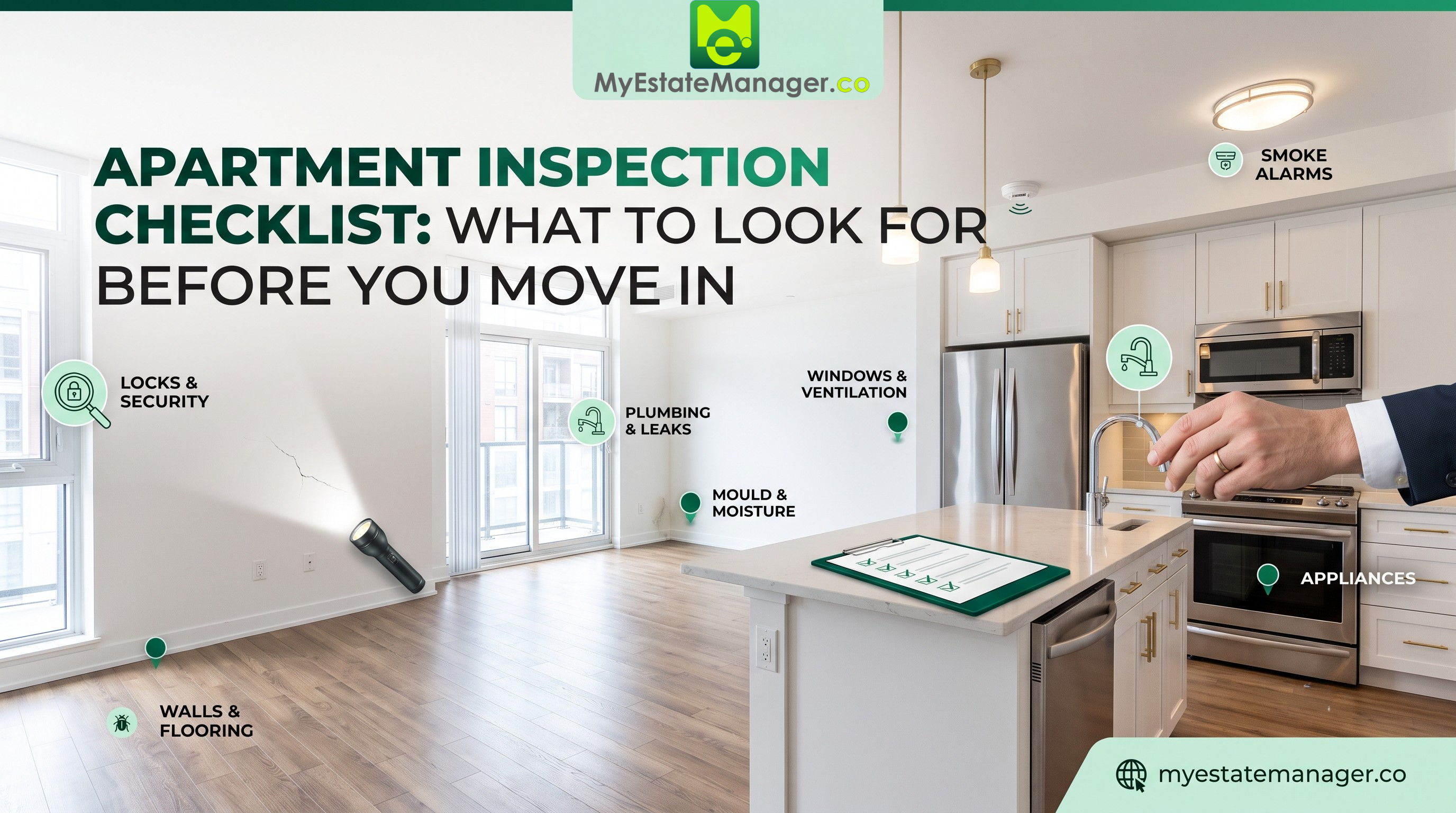
Use this apartment inspection checklist to identify existing damage, safety concerns, plumbing issues, appliance faults, mould, pests, and necessary repairs before moving into your new rental.
Overview
Apartment Inspection Checklist: What to Look For Before You Move In
A careful move-in inspection can uncover safety concerns, maintenance problems, pest activity and existing damage before your furniture and belongings enter the apartment
⚡ Quick Answer
Before moving into an apartment, inspect every room while the unit is empty, test the systems you are permitted to test, photograph all visible damage and submit a written condition report to the landlord or property manager
Prioritise problems that affect life safety, security, water intrusion, electricity, heating, plumbing and indoor air quality Cosmetic marks should still be documented, but they should not distract you from defects such as loose outlets, missing alarms, active leaks, mould, insecure locks or signs of infestation
🏠 What a Move-In Inspection Means
A move-in inspection is a systematic review of the apartment’s condition before you begin occupying it It is different from a casual viewing because you are no longer deciding whether the apartment looks attractive You are checking whether its rooms, systems, fixtures and safety features appear functional and whether existing defects have been accurately recorded
The inspection should cover much more than scratched paint and carpet stains HUD’s Housing Choice Voucher inspection checklist includes electricity, electrical hazards, door and window security, wall and floor conditions, kitchen appliances, bathroom fixtures, ventilation, heating, plumbing, smoke detectors, exits, infestation, interior air quality and building conditions The HUD form applies to a specific federal housing programme, but its categories provide a useful framework for a thorough rental inspection
🔎 Condition review
Identify stains, cracks, holes, broken fixtures, damaged flooring, missing hardware and other conditions that already exist
🛡️ Safety review
Look for issues involving alarms, exits, locks, electrical hazards, heating equipment, water intrusion and indoor air quality
The purpose is not to perform a professional building inspection or dismantle equipment Renters should not open electrical panels, climb onto roofs, move unsafe appliances or disturb suspected hazardous materials When a defect requires technical expertise, request evaluation by the landlord, property manager or a qualified professional
🎯 Why the Inspection Matters
It separates existing damage from future damage
A detailed condition report creates a dated record of what was present before you moved in Without documentation, a later disagreement may depend on incomplete memories or conflicting descriptions
Photographing damage does not automatically determine legal responsibility, but it provides useful evidence Clear documentation can help tenants and property managers discuss repairs, maintenance history and move-out deductions more accurately
It can reveal problems before they become emergencies
A slow leak beneath a sink may appear minor during a viewing After several weeks, it can damage cabinets, flooring and personal belongings A window that does not lock can become a security concern A bathroom fan that does not operate can contribute to persistent humidity
EPA states that moisture control is the key to controlling mould It recommends drying water-damaged materials within 24 to 48 hours and keeping indoor relative humidity below 60%, ideally between 30% and 50%
📊 Indoor Humidity Inspection Guide
May feel overly dry
EPA ideal range
Monitor moisture
Higher moisture concern
Source: U.S. Environmental Protection Agency moisture and mould guidance Humidity readings vary by climate, season and room, so a single measurement should be interpreted alongside visible moisture, condensation and ventilation
It helps you prioritise repairs
Not every defect has the same urgency A chipped cabinet handle is different from an exposed wire A small paint scuff is different from an active ceiling leak
🚨 Critical
Fire or carbon-monoxide alarm failures, exposed wiring, major leaks, blocked exits, gas odours, unsafe heating or doors that cannot be secured
⚠️ High priority
Mould, pest evidence, nonfunctioning plumbing, poor ventilation, broken windows, appliance faults or persistent dampness
📝 Document
Scratches, small holes, worn finishes, minor stains, chipped tiles, damaged blinds or other existing cosmetic conditions
🧰 How to Prepare for the Inspection
Schedule the inspection before furniture, boxes and rugs cover the apartment Daylight makes it easier to identify stains, damaged surfaces and window problems Allow enough time to move slowly through every room rather than trying to finish in a few minutes
Bring a simple inspection kit
- Your lease, move-in form or property-manager checklist
- A fully charged phone for photographs and video
- A phone charger or small plug-in device for permitted outlet testing
- A flashlight for cabinets, corners and under-sink areas
- Tissue or paper towel for identifying small plumbing drips
- A tape measure for furniture and appliance spaces
- A notebook or digital notes application
- An inexpensive humidity meter when dampness is a concern
Ask the manager which appliances, utilities and fixtures are included in the lease Clarify whether electricity, gas, water and heating will be active during the inspection A system cannot be meaningfully tested if the relevant service is disconnected
✅ Room-by-Room Apartment Inspection Checklist
🚪 Entrance, Doors and Security
- Confirm that the main door closes fully without excessive force
- Test the lock, deadbolt, handle and key from inside and outside
- Check the door frame for splitting, loose hardware or evidence of forced entry
- Confirm that peepholes, intercoms, buzzers or access systems operate
- Check balcony, patio and secondary-door locks
- Ask whether locks were changed or rekeyed after the previous tenancy
- Confirm that emergency exits are identifiable and unobstructed
Doors that do not latch, damaged frames and missing locks should be treated as security issues rather than cosmetic defects
🛋️ Living Room and Bedrooms
- Inspect walls and ceilings for cracks, bubbling paint, stains or soft areas
- Look closely around windows and exterior walls for condensation or discolouration
- Walk across the entire floor to identify loose boards, broken tiles or raised carpet edges
- Open and close every window and confirm that accessible windows lock
- Check blinds, curtain rails, closet doors and shelving
- Test installed lights and ceiling fans
- Look at outlets and switches for cracks, looseness, scorch marks or unusual heat
- Confirm that heating or cooling reaches each sleeping area
- Check for smoke alarms inside or near sleeping areas according to local requirements
Do not insert objects into outlets or remove covers Report loose, damaged, sparking or discoloured electrical components immediately
🍳 Kitchen
- Run hot and cold water and observe pressure, drainage and temperature
- Look under the sink for active drips, swollen wood, stains or musty odours
- Check the faucet base and pipe connections for moisture
- Open every cabinet and drawer
- Inspect food-storage areas for pest droppings, dead insects or damaged packaging left behind
- Test the refrigerator, freezer, stove, oven, range hood and dishwasher when included
- Confirm that appliance doors close correctly and seals appear intact
- Check countertops for burns, chips, cracks and loose sections
- Confirm that cooking ventilation works and vents appropriately
- Look for evidence of water behind or beside appliances without moving heavy equipment
If the apartment uses gas appliances, report any gas-like or sulphur-like odour immediately and leave the area according to local emergency guidance Do not attempt to identify or repair a suspected gas leak yourself
🚿 Bathroom
- Flush the toilet and confirm that it refills and stops running
- Check around the toilet base for movement, stains or moisture
- Run the shower and taps to test hot water, pressure and drainage
- Inspect grout, caulk and tile joints for deterioration
- Look under the basin and around the bathtub for leaks
- Test the exhaust fan or confirm that an operable window provides ventilation
- Look for mould, peeling paint, condensation damage and persistent musty odours
- Check mirrors, towel bars and mounted fixtures for stability
- Confirm that the bathroom door closes and provides privacy
Repeated mould in a bathroom may indicate more than a cleaning problem EPA advises fixing the moisture source because mould is likely to return when the water or humidity problem remains
🌡️ Heating, Cooling and Ventilation
- Ask how heating and cooling are controlled and who pays the utility cost
- Test the thermostat when the system is available
- Listen for unusual rattling, grinding or repeated cycling
- Inspect visible vents for heavy dust, blockage, rust or water staining
- Confirm that radiators, baseboard heaters and space-heating equipment appear securely installed
- Ask when filters and building systems were last serviced
- Check whether windows provide adequate ventilation where required
Heating adequacy and safety, cooling or ventilation, water heaters, water supply and plumbing are all included in HUD’s formal inspection framework
🧺 Laundry and Storage Areas
- Inspect washer connections and nearby flooring for moisture
- Check dryer vents for visible damage or blockage
- Test included machines according to the manager’s instructions
- Look for leaks beneath utility sinks or water heaters
- Inspect storage rooms for pests, dampness and insecure doors
- Confirm which storage space is assigned to your unit
🛡️ Health and Safety Checks
Smoke alarms
The U.S. Fire Administration recommends smoke alarms inside every bedroom, outside each separate sleeping area and on every level of a home It also recommends monthly testing and replacement of smoke alarms ten years after manufacture
During the inspection, locate each alarm, check for visible damage and ask the manager to demonstrate that it works Do not remove batteries or disable an alarm Local installation requirements may differ
Carbon-monoxide alarms
Carbon monoxide is colourless and odourless It may be produced when a fuel-burning furnace, heater or other appliance is not operating or venting correctly The U.S. Fire Administration recommends CO alarms outside each separate sleeping area and on every level of the home
Ask whether the building contains fuel-burning appliances, fireplaces, attached garages or other potential CO sources Confirm which alarms are required by local law and who is responsible for maintaining them
Mould and moisture
Look for water stains, peeling finishes, warped materials, condensation and musty odours Check beneath sinks, near tubs, around windows and below visible plumbing
EPA notes that visible mould generally does not require sampling to confirm that a moisture problem exists Renters should report plumbing leaks and moisture problems promptly Suspected extensive or hidden mould should be evaluated carefully rather than disturbed during a move-in walkthrough
Lead-based paint
In the United States, federal disclosure requirements apply to most housing built before 1978 Before signing a lease, landlords and property managers generally must provide required lead information, disclose known hazards and provide available reports for covered housing
During the inspection, photograph peeling, chipping, cracking or chalking paint, particularly around windows, doors and high-friction surfaces Do not sand, scrape or disturb suspected lead-based paint
Bed bugs and other pests
EPA recommends looking for physical evidence rather than relying only on bites Signs can include rusty or reddish stains, dark spotting, pale eggshells, shed skins and live insects Bed bugs may hide in furniture seams, drawer joints, cracks, loose wallpaper and electrical-receptacle areas
Also inspect for cockroach or rodent droppings, gnaw marks, damaged food containers, traps and strong pest-control odours Ask the manager about previous reports and the building’s pest-response process
Radon
Radon cannot be identified by sight or smell EPA identifies it as the second-leading cause of lung cancer in the United States and recommends action when test results are at or above 4 pCi/L
Renters in higher-risk regions, especially those considering basement or lower-level units, may ask whether the apartment or building has been tested Testing rules and landlord obligations vary, so consult local radon guidance
🏢 Building and Common-Area Inspection
The condition of the apartment is only part of the rental experience Inspect the routes and facilities you will use every day
- Walk from the entrance to the apartment and note lighting, handrails and floor conditions
- Confirm that exterior and lobby doors close and lock
- Look for blocked exits, damaged stairs or missing railings
- Test the elevator and note current inspection information where displayed
- Check mail, package and delivery arrangements
- Review rubbish, recycling and pest-control areas
- Inspect parking, bicycle storage and assigned storage
- Listen for noise from mechanical rooms, lifts, roads and neighbouring units
- Check mobile reception and available internet providers
- Ask how emergency maintenance requests are reported after business hours
Return at a different time of day when possible Traffic, lighting, parking demand, building noise and shared-area activity may be different in the evening
📷 How to Document the Apartment’s Condition
Use wide photographs and close-ups
Begin with a wide image showing the room and location Then take a close-up showing the exact defect Include an object for scale when the size is not obvious
Describe the problem precisely
Replace vague notes such as “bathroom damaged” with clear descriptions such as “approximately five-centimetre crack in tile beside bathtub” or “active drip from cold-water connection beneath kitchen sink”
Separate existing condition from requested repair
A condition report records what exists A repair request asks management to correct it Use the property’s formal maintenance process for problems requiring attention
Keep proof of delivery
Save the submitted form, photographs, emails and maintenance-ticket confirmations Follow the deadline and method stated in the lease or required by local law
| Item | Condition observed | Evidence | Requested action | Priority |
|---|---|---|---|---|
| Kitchen sink | Slow drip beneath cold-water connection | Photo K-04 and video timestamp 03:18 | Inspect and repair before move-in | High |
| Bedroom wall | Small paint scuff near wardrobe | Photo B-07 | Record existing condition | Document |
| Smoke alarm | Test did not produce audible alarm | Video timestamp 07:42 | Replace or repair before occupancy | Critical |
🚩 Major Red Flags Before You Accept the Apartment
Do not rely solely on verbal assurances that everything will be repaired Request written confirmation identifying the defect, planned action and expected completion date
🚀 Best Next Step Before Moving In
Complete the inspection while the apartment is empty and submit your condition report as soon as possible Separate the findings into three groups
- Must be corrected before occupancy: safety, security, major plumbing, heating, electrical and serious moisture issues
- Can be scheduled: non-emergency repairs that affect normal use but do not create immediate danger
- Existing condition only: cosmetic damage that should be recorded even when no repair is requested
Confirm that promised repairs are complete before moving boxes into the affected area Reinspect repaired leaks, locks, alarms and appliances rather than assuming the work has been completed successfully
❓ Frequently Asked Questions
How long should an apartment move-in inspection take?
A careful inspection of a small apartment may take 30 to 60 minutes, while a larger unit or one with several appliances may require longer Accuracy is more important than speed
Should I photograph minor scratches and stains?
Yes Minor cosmetic damage may not require repair, but recording it can help distinguish existing wear from later damage
What should I do when I find mould before moving in?
Photograph the area without disturbing it, report it in writing and request that the moisture source and affected materials be properly evaluated Cleaning the visible surface without fixing the water problem may allow mould to return
Can I refuse to move in until repairs are completed?
Your options depend on the lease, severity of the defect and applicable local law Obtain written information from the landlord and seek local tenant or legal guidance when serious conditions remain unresolved
Should the landlord attend the inspection?
A joint inspection can help both parties agree on the condition, but it does not replace photographs and a written report Follow the process required by your lease and jurisdiction
What if utilities are not active during the inspection?
Record which systems could not be tested and arrange a follow-up as soon as services are connected Do not sign a statement confirming that an untested system works
📑 Sources and Methodology
Research approach
This checklist combines an official HUD rental-inspection framework with current federal guidance on moisture, mould, lead-based paint, smoke alarms, carbon monoxide, bed bugs and radon
HUD Form 52580 was designed for the Housing Choice Voucher Program and is not presented as a universal building code It was used to identify practical inspection categories such as electricity, security, windows, floors, appliances, plumbing, heating, ventilation, exits, infestation and air quality
The humidity graph is based on EPA guidance recommending indoor relative humidity below 60%, ideally between 30% and 50% The visual is educational and does not diagnose a specific building condition
Sources were reviewed in July 2026 Local rental standards and disclosure requirements should always be verified for the property’s jurisdiction
References
-
U.S. Department of Housing and Urban Development — HUD Form 52580 Inspection Checklist
Categories covering electricity, security, windows, floors, kitchen and bathroom fixtures, smoke detectors, exits, infestation, plumbing, heating and general safety
Inspection framework
HUD inspection checklist -
U.S. Environmental Protection Agency — A Brief Guide to Mold, Moisture and Your Home
Moisture control, 24-to-48-hour drying guidance, indoor-humidity recommendations and advice for renters
Indoor air guidance
EPA mould and moisture guide -
U.S. Environmental Protection Agency — Real Estate Disclosures About Potential Lead Hazards
Federal disclosure requirements for most pre-1978 housing and guidance for renters and property managers
Lead disclosure
EPA lead-disclosure guidance -
U.S. Fire Administration — Smoke Alarms
Alarm placement, testing and replacement guidance
Fire safety
USFA smoke-alarm guidance -
U.S. Fire Administration — Carbon Monoxide Poisoning Prevention
Carbon-monoxide sources and residential alarm-placement guidance
CO safety
USFA carbon-monoxide guidance -
U.S. Environmental Protection Agency — How to Find Bed Bugs
Physical signs, common hiding locations and early-identification guidance
Pest guidance
EPA bed-bug identification guide -
U.S. Environmental Protection Agency — Health Risk of Radon
Radon health risks, testing context and action-level information
Radon guidance
EPA radon health guidance
💚 Start Your Tenancy With Better Records
A clear inspection and documented maintenance process can help tenants and property managers solve problems earlier, communicate more effectively and protect the condition of the property
Explore MyEstateManagerLeave a Comment
Your email will be verified but will never be displayed publicly.
Join the Conversation
0 approved comments. Share a useful perspective after email verification.
No comments yet. Be the first to add a helpful perspective.